NavalBrain
Book a call (opens in a new tab)

Know more. Burn less. Perform better.

Every ship, understood through its physics.

A fouled hull is adding
5.08% more fuel
Which costs
€2,156 a day
Side profile of a Capesize bulk carrier on its design waterlineA naval-architecture line drawing. The hull below the waterline is filled in antifouling red and ruled with waterlines; the deck above carries seven hatch covers, an aft accommodation block, bridge wings, a funnel and a mast.
Example figures: one Capesize bulk carrier.
  • No new sensors on board
  • Any ship, any size, any age
  • Physics first, no black boxes
  • Your data never goes to outside AI providers

The questions that cost you money, answered.

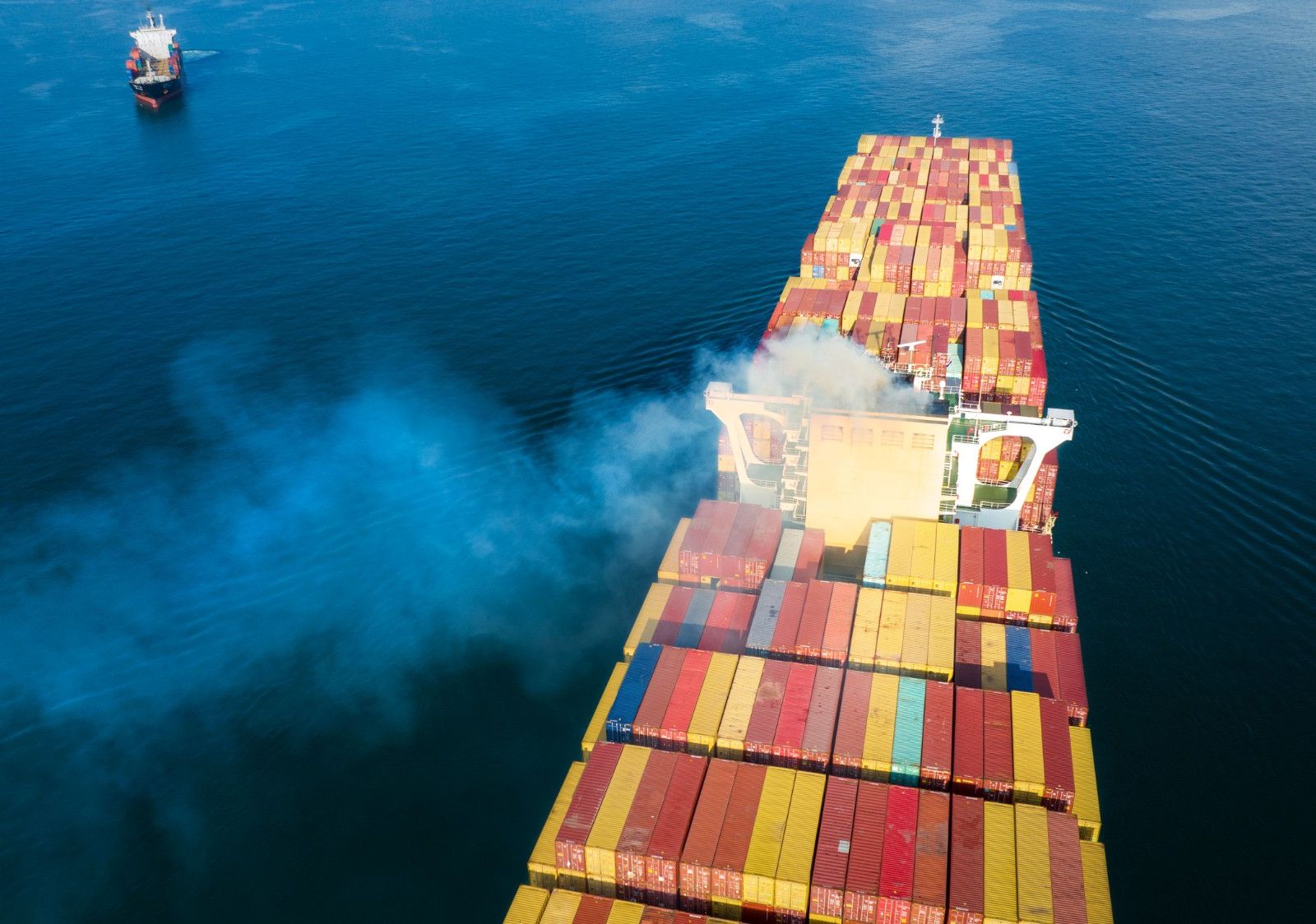
  • A container ship at sea seen from above, exhaust drifting from its funnel across the water, another ship in the distance.

    NavalBurnDiagnose

    Why did your ship burn more fuel yesterday?

    The day's fuel, traced to what burned it: the weather, the engine, the load, the trim or the hull.

    See NavalBurn
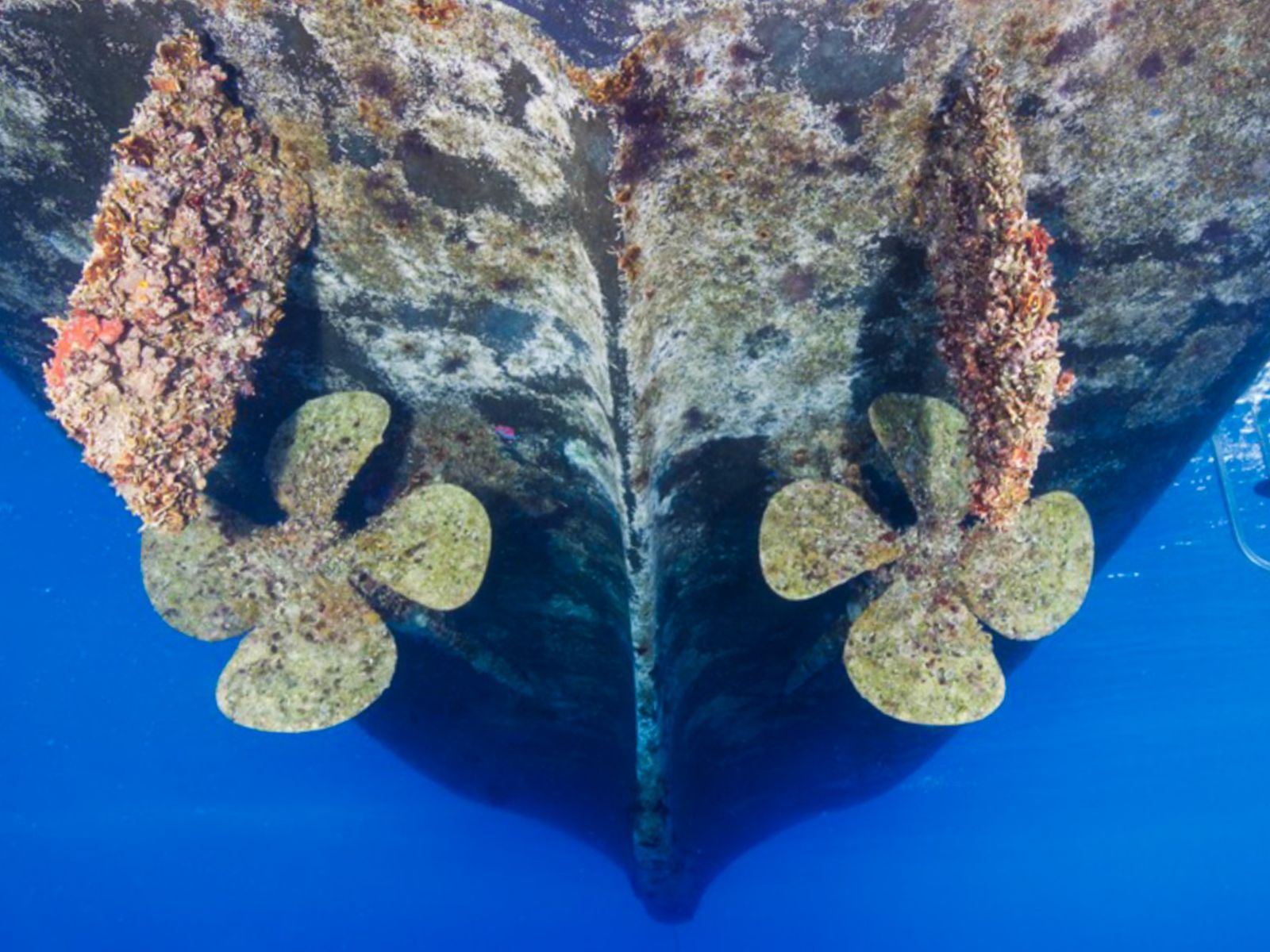
  • A hull seen from below the waterline, its plating and twin propellers covered in marine growth.

    NavalHullDiagnose

    What is a dirty hull costing you right now?

    Hull condition tracked every day on its own digital twin, with the fuel and CO2 lost to fouling.

    See NavalHull
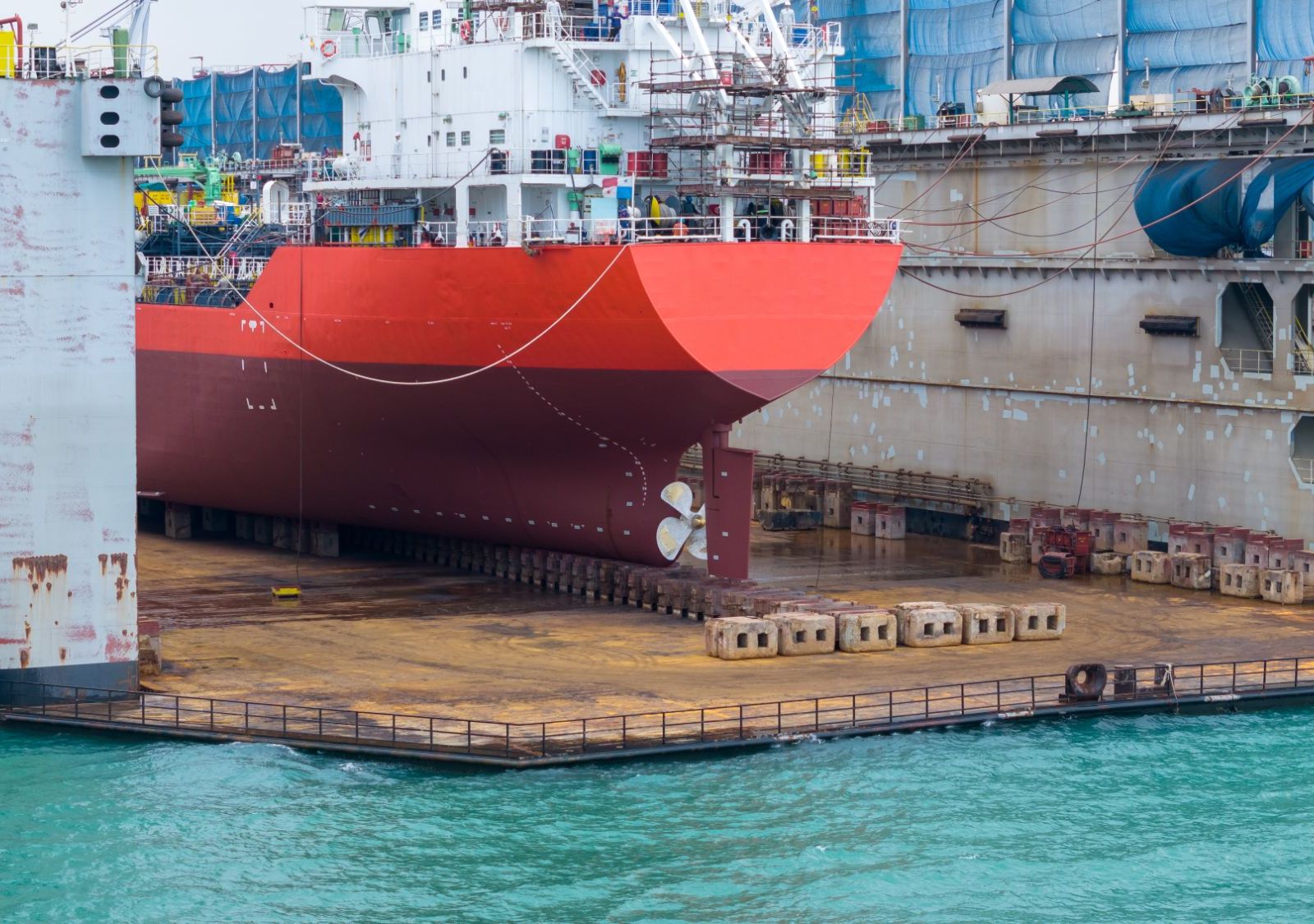
  • A tanker's red hull in a floating dry dock, resting on keel blocks with its propeller and rudder exposed.

    NavalRetrofitPrescribe

    Will that upgrade actually pay for itself?

    Each option simulated on your vessel and her real trades, with fuel saved and payback, worst case to best.

    See NavalRetrofit
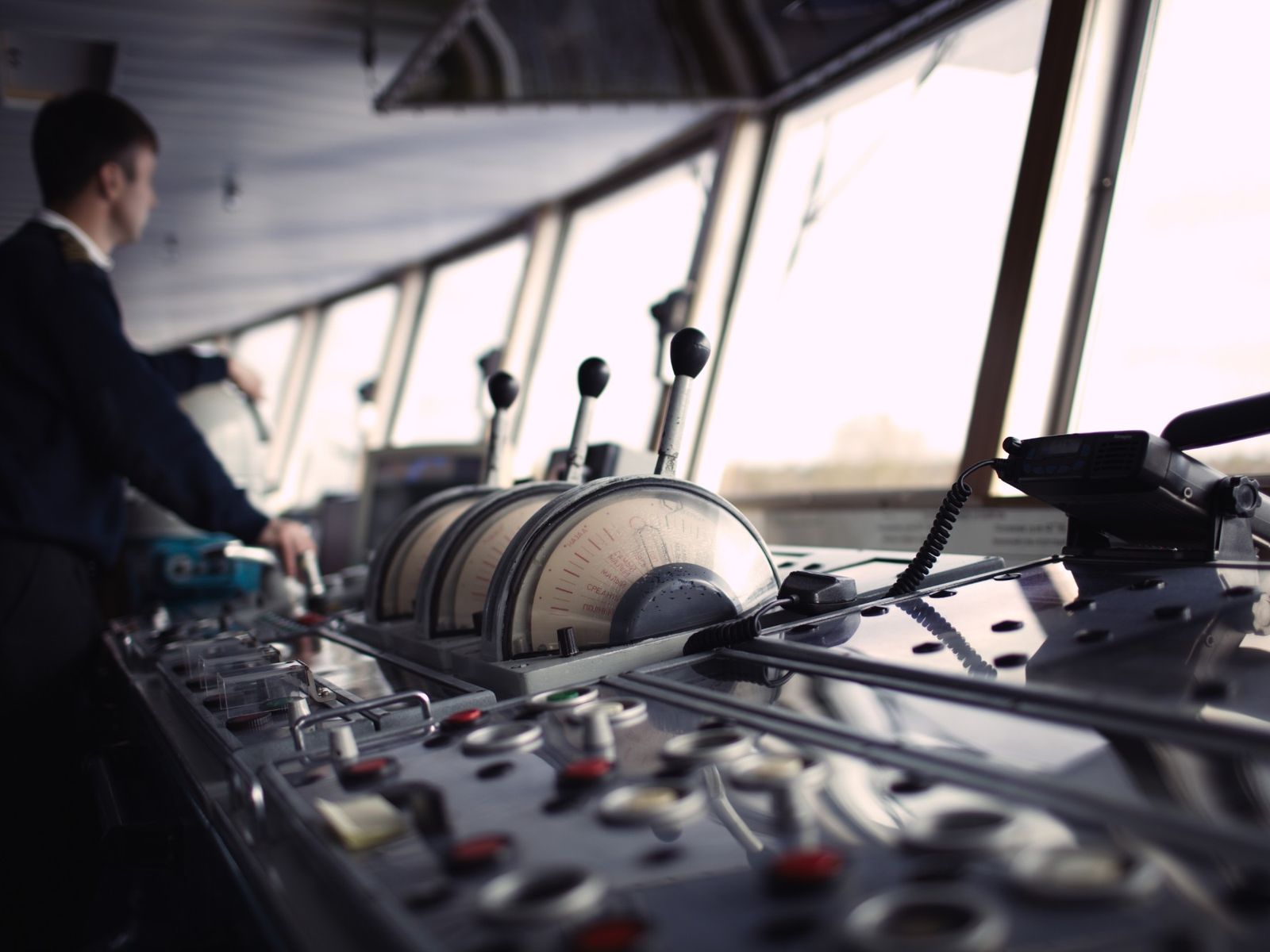
  • An officer on a ship's bridge at the console, the engine telegraph levers in the foreground.

    NavalDecidePrescribe

    Clean now or later? Slow down or keep schedule?

    Nine AI agents examine every option and vote. The Director then recommends, with the reasoning shown.

    See NavalDecide
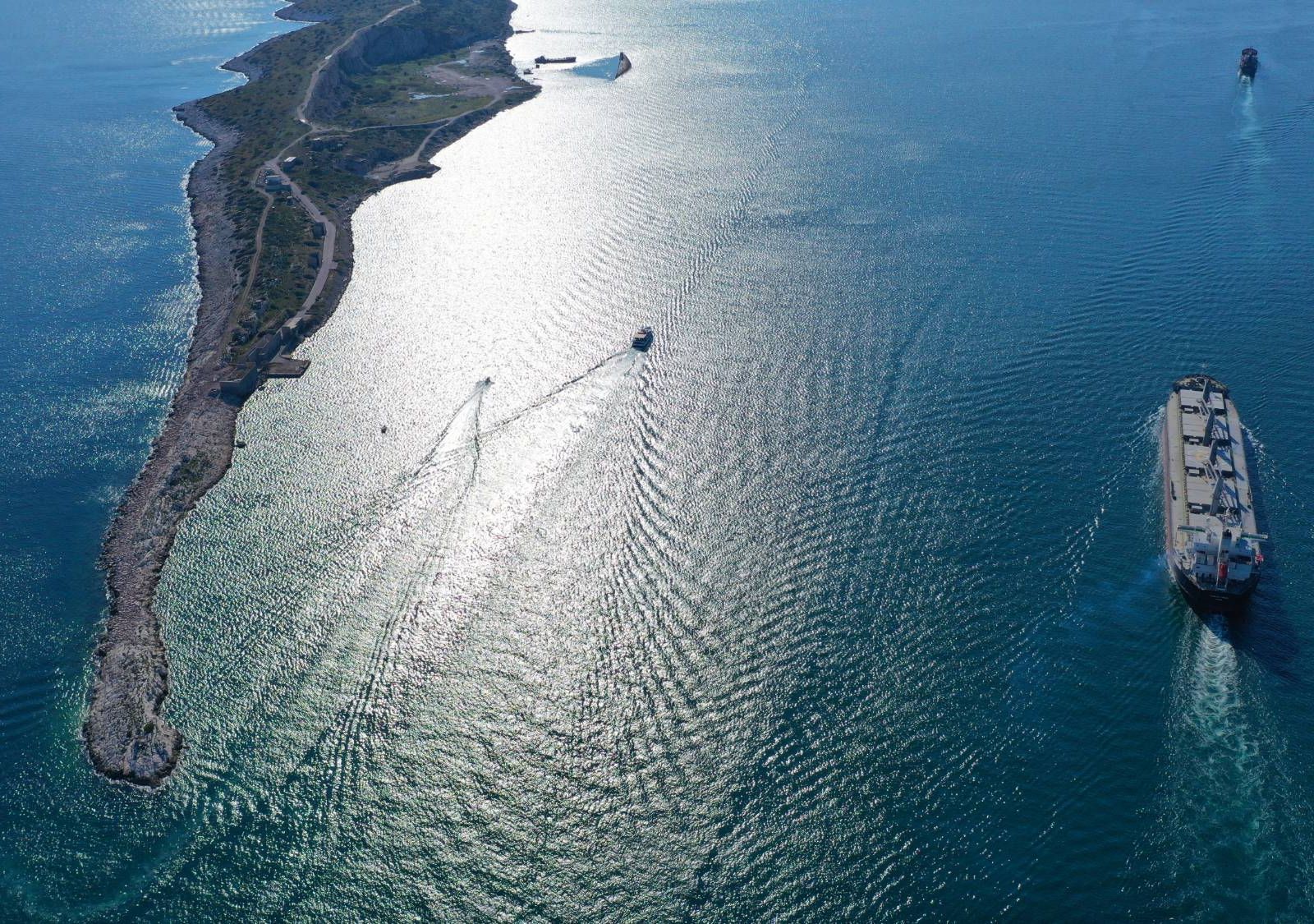
  • A bulk carrier under way seen from above, passing a narrow headland, its wake trailing behind.

    NavalRoutePrescribe

    Why race to port, only to wait days at anchor?

    Route and speed planned around weather and currents, with arrival timed to the port queue, within charter party terms.

    See NavalRoute
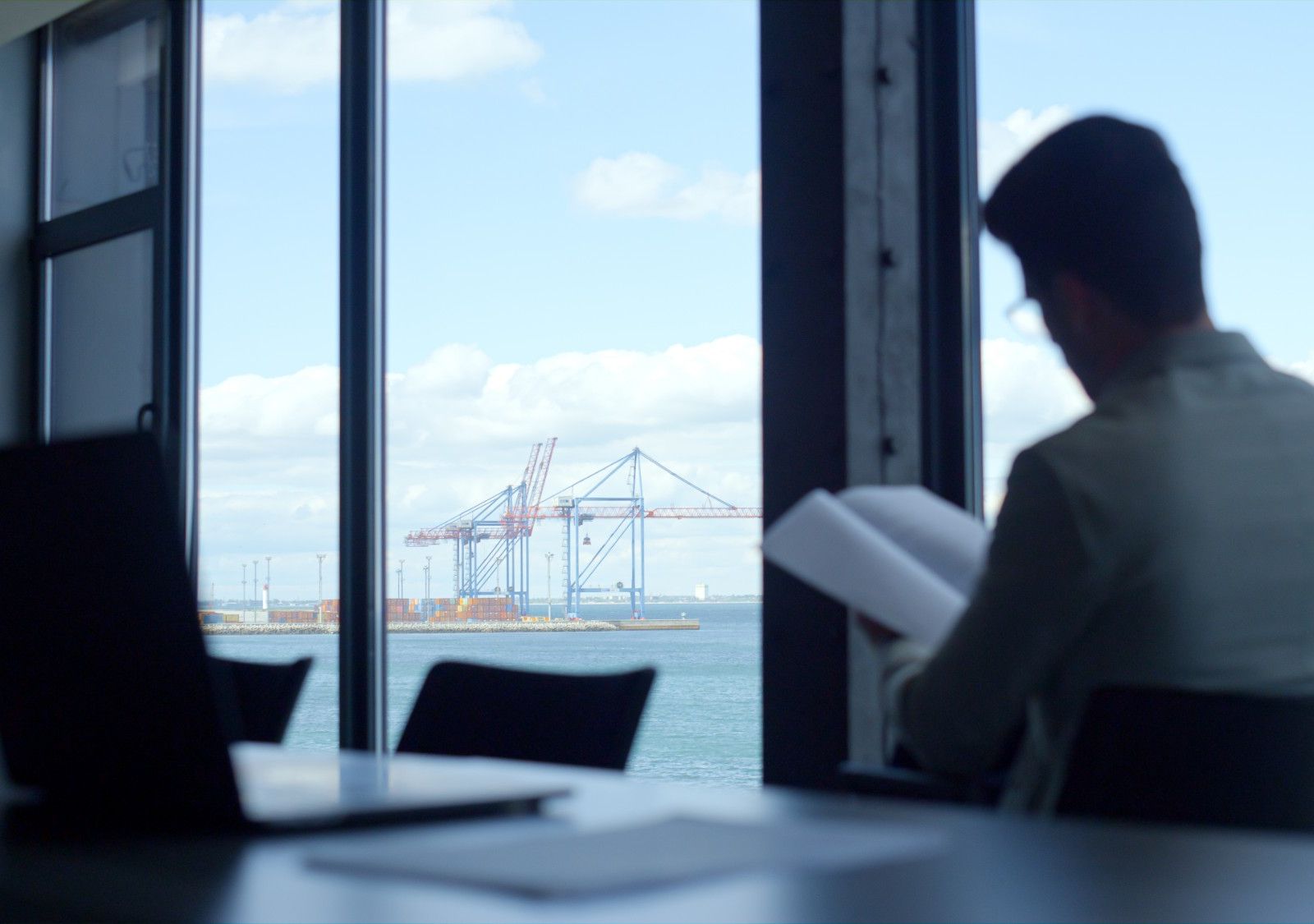
  • A person reading a report by an office window that looks out over a container port.

    NavalReportReport

    How many hours does your team lose turning noon reports into regulatory reports?

    Ask for it in plain words: CII, EU ETS, FuelEU or performance, any period, in Excel, Word or PDF.

    See NavalReport

Still thinking about it?

  • Proven savings.

    Fuel, money and penalties saved by knowing why, not by luck or good weather: every recommendation follows a path fitted to what your modelled vessel can do.

  • Trusted figures.

    A number without its uncertainty is a guess. Ours show their confidence interval and where they came from. Black boxes see just numbers; at NavalBrain we see beyond them.

  • Per vessel model.

    Separate tools give separate answers. Ours share one model of your vessel, so a route solver knows a hull's condition, and a retrofit simulation understands your burning habits.

NavalBrain News

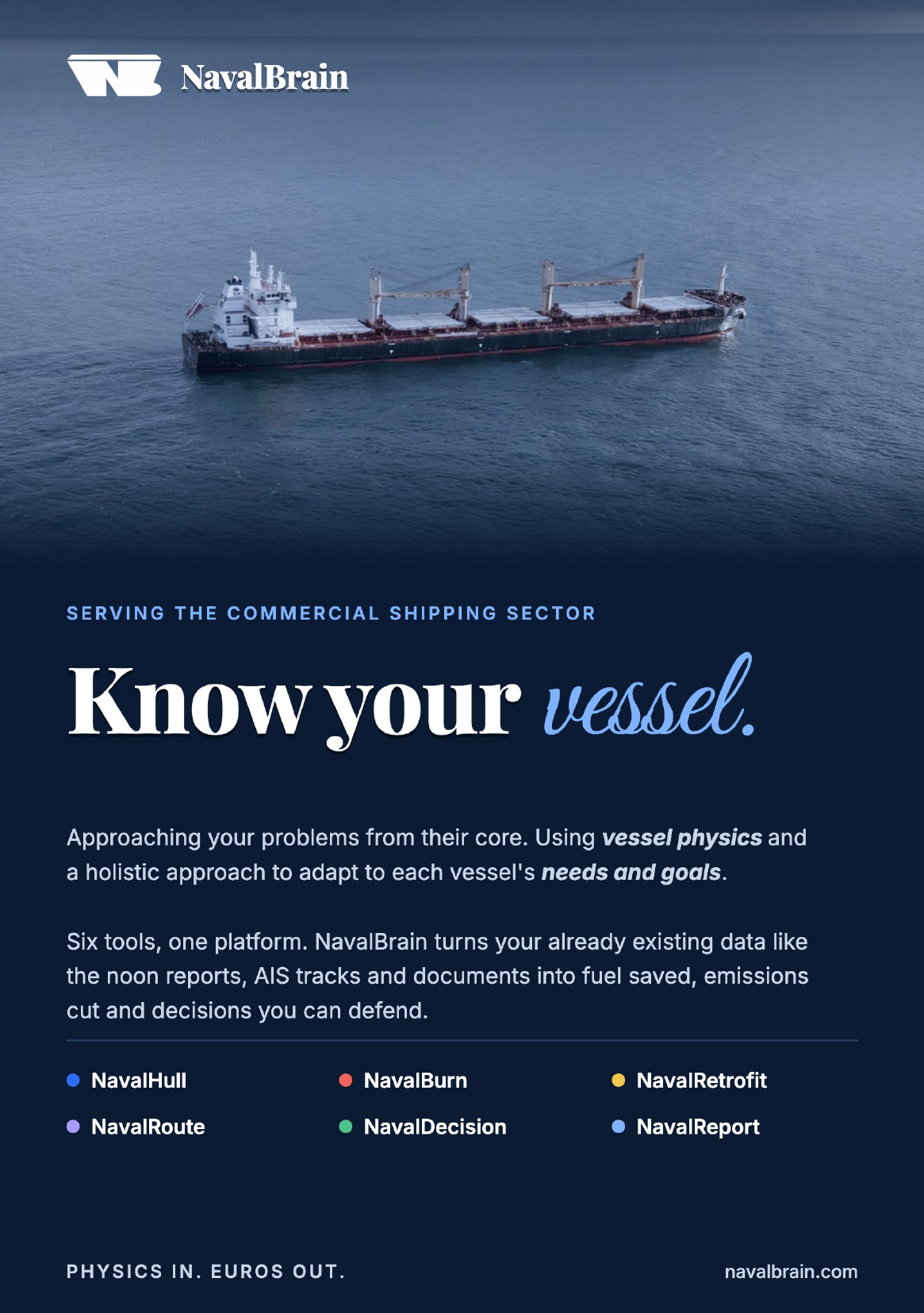
Cover of the NavalBrain brochure: a bulk carrier at sea, the headline “Know your vessel.” and the six products, each beside its coloured dot.
PDF, 2.9 MB

The NavalBrain brochure: six tools, one platform

Announcement

NavalBrain

NavalBrain turns the data you already have, like noon reports, AIS tracks and documents, into fuel saved, emissions cut and decisions you can defend.

The brochure sets out what each tool does, how every noon report is verified before it is used, and a worked example of one vessel over one quarter: 120 t of fuel and about €97,000 saved.

Download the brochure (PDF, 2.9 MB)

All the news

  1. Share

    Noon reports and documents for two of your vessels.

  2. Baseline

    We build each vessel's performance baseline.

  3. Results

    Savings, risks and reports, per vessel, in euros.